
Premier Corporate Video Production in Dallas
Story first. Since 2013.
Image Media Lab is the studio of founder Sem Maltsev: started in New York City, home in Dallas since 2021, filming top executives, global brands, and industry leaders across Texas and nationwide.
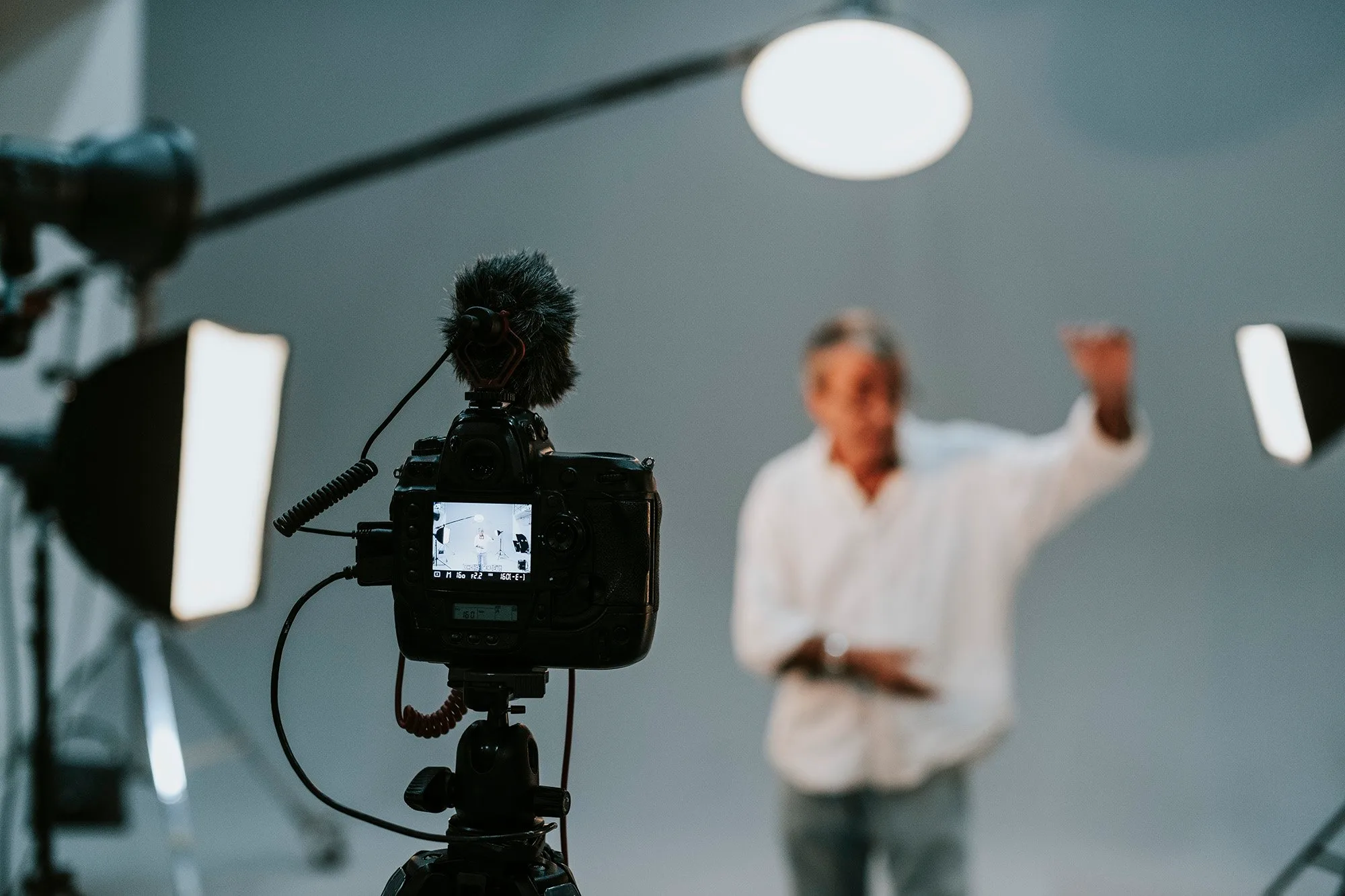
Founded NYC 2013 · In Dallas since 2021
On set with teams from


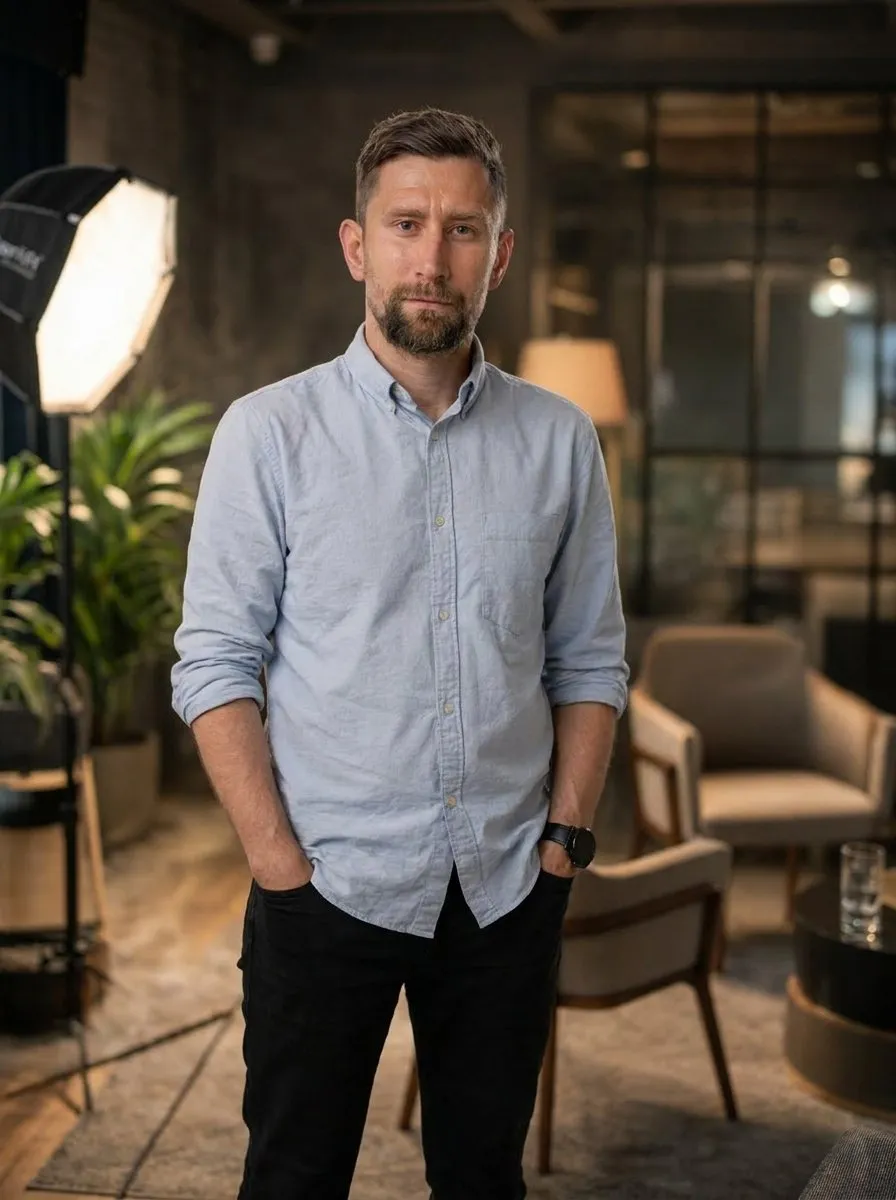
Founder / Director
01 / The founder
New York roots, Dallas base
Built behind
the camera.
Sem Maltsev founded Image Media Lab in New York City in 2013 and has kept it deliberately hands-on ever since. For over a decade the studio has worked at the forefront of corporate video production, crafting high-impact films for top executives, global brands, and industry leaders. In 2021 the operation moved to Dallas to better serve businesses across Texas and nationwide.
The record runs deep. For The Journal of Clinical Investigation’s long-running series “Conversations with Giants in Medicine,” Sem has filmed the giants of medicine for more than a decade: 80 leading physicians and scientists, including 15 Nobel laureates and 27 Lasker winners. The wider client list spans Twitter co-founder Biz Stone, filmmaker Abel Ferrara, and Fortune 500 teams coast to coast.
- Filming in Dallas and all 50 states
- FAA Part 107 certified drone team
- Fixed-fee, end-to-end production
- Trusted by Fortune 500 teams
02 / The record
Thirteen years, on record.
- 2013
- Founded in New York City
- 2021
- Home base moved to Dallas
- 80
- Giants of medicine on camera
- 50
- States we can film in
03 / The New York years
Interviews filmed in New York
Where it started.
Sem began filming for FilmAnnex in 2010 and founded the studio in 2013. Here is FilmAnnex’s founder on the work, and two interviews from those years: Twitter co-founder Biz Stone and Olympic judo champion Kayla Harrison.
-
Francesco RulliFounder and president, FilmAnnex
Francesco Rulli, founder and president of the online film distributor FilmAnnex, on the more than a thousand videos, interviews and documentaries made with Sem Maltsev's team in New York, from Nobel Prize winners and athletes to stories from Afghanistan, and on handing off production so FilmAnnex could focus on distribution.
Read the transcript
My name is Francesco Rulli. I'm the president and founder of FilmAnnex, an online film distribution company with over 300,000 registered users.
In 2010, we started working with Image Media Lab, a production company who helped us to produce over a thousand videos, films, interviews and documentaries, ranging from products and content coming from Afghanistan and other parts of the world all the way to what we do domestically here in New York City.
We have been interviewing Nobel Prize winners, athletes, thought leaders in many different fields, business people, and we have been empowering millions of people with the wisdom of those people through the videos, through the interviews, the documentaries, and also the fiction productions.
Image Media Lab has allowed us to overtake the difficulties of production. I used to have a company, a fiction company, with John Malkovich. And John, as a filmmaker, as a producer, as an actor, always told me how difficult it is to produce films.
Image Media Lab has been able to resolve those problems for me and allow me to focus on the distribution end, when they have taken care of all the production aspects extremely professionally and with extreme success. I'm glad and happy and also very, very lucky to have met them. Thank you.
-
Biz StoneCo-founder, Twitter
Twitter co-founder Biz Stone, interviewed at FilmAnnex's New York studio, on his path from graphic designer to internet entrepreneur, how he would teach social media to students in Afghanistan (start by listening), why constraints encourage creativity, and why more entrepreneurs, women especially, make an economy healthier. Produced by Image Media Lab for FilmAnnex.
Read the transcript
Narrator: You are going to watch an interview with Biz Stone, Twitter co-founder and Jelly application founder. The Jelly application has been recently launched with the purpose of letting people help each other in their lives, sharing the knowledge and information and connecting people through their mobile phone. In FilmAnnex's New York City studio, Biz Stone talked about the importance of digital literacy and social media in developing countries like Afghanistan, where FilmAnnex and its Women's Annex initiative is operating. Biz Stone reinforced the value and the importance of female engagement, and how female entrepreneurs are a vital part of successful economies.
Interviewer: Welcome, Biz, to FilmAnnex's studio. As an introduction, can you tell us about yourself and your background?
Biz Stone: My name is Biz Stone. I'm a co-founder of Twitter Incorporated. I actually started out as an artist. I got a job when I was young as a graphic designer, and that turned into starting my own design studio, and I figured I should learn how to design websites. So I started doing web design, and that led to creating one of my first internet companies in 1999. And that's when I became an internet entrepreneur. And then I ended up at Google, and I left Google and started a new company that failed, but then Twitter worked out for me.
Interviewer: If you want to implement a social media curriculum for kids in Afghanistan who have never been using that much social media, what is your suggestion for that?
Biz Stone: Well, I guess if I were to start a social media curriculum for kids in Afghanistan who have never used social media before, the first thing I would suggest would be just to read, or to listen, or to, you know, not to jump right in writing or creating content yet. I would suggest a curriculum that led with listening, watching for patterns, seeing what works and what doesn't work. Does using pictures work better than not using pictures, that sort of thing. I would begin with the listening aspect, and then I would move into the, you know, what's the best way to go about actually creating content. That would be, I think, the next step.
Interviewer: In your opinion, what are the main challenges of using social and digital media in developing countries, and in particular Afghanistan?
Biz Stone: From my perspective, which, I mean, granted, I think is very limited, I think the challenges of using social media in developing countries, in particular Afghanistan, is the constraints that not just the governments but also society put on people, and the sort of tricky nature of what you're allowed to share versus what you should share and what you shouldn't share. I think in the United States, people have a tendency to just say whatever they feel like, and there's really not too many consequences. But in some of these developing nations it can be dangerous to just say whatever you feel like saying. Not just, you know, the government, but also different groups and, you know, cultures. So I think the challenges there are trying to figure out how to work within the constraints of those societies.
I mean, with Twitter you have the constraint of 140 characters. Now you have to add to that societal constraints, which makes it even more challenging. But I always like to say that constraints encourage creativity, so maybe that can force some of the most creative uses of social media there is.
Interviewer: As an entrepreneur, do you think entrepreneurship in developing countries can help, especially women, like Afghanistan, for more economical growth, and make them more financial independence?
Biz Stone: More entrepreneurs in developing nations, especially Afghanistan, especially women, I think that can have an impact on economic growth, because in a sense what that's doing is it's creating more opportunity. It's creating more surface area. It's generating more jobs and more work. Whenever you do that, whenever you create more surface area for something and more opportunity, then everybody wins. And there is just, in general, a more robust system, because everyone, or more people, are engaged.
I think that's the most important thing in any economy: what is the level of engagement? It's not necessarily the amount of money that's changing hands. It's how many people are engaged in the economy. And the more entrepreneurs there are, the more people participating, especially in nations where historically women were not allowed to participate, that suddenly opens up a whole new field, whole new opportunity, a lot more people being engaged in that economy. So that can be very healthy.
Interviewer: In which way do you see social media's connection with education, especially in developing countries, for kids and schools?
Biz Stone: I see social media's connection to education, especially for kids and in developing nations and schools. I think the connection really is about human connectivity. It's about less isolation. One of the most important things about education is that we learn from one another.
Albert Einstein famously said that information is not knowledge, and knowledge is really the practical application of human understanding. And in order to truly learn and to truly become educated, you need to interact with more people. You don't just read a book that has one point of view. You need to interact with many different people from different cultures, different points of view, and I think that's where social media can play a very important role, because essentially social media is opening the world to itself.
And in my optimistic view of the future, social media is allowing people all around the world to get in touch with each other in a way that is hopefully creating more empathy. It's creating the idea that we can take a moment to walk in another person's shoes, and in so doing we don't become citizens of a particular city or state, but citizens of the world. And I think that this has a big impact on the future of education.
Interviewer: Thank you very much for being with us today.
Biz Stone: Sure thing. Thanks for having me.
-
Kayla HarrisonOlympic judo champion
Kayla Harrison on starting judo at six, moving to Boston at 16 to train with coach Jimmy Pedro, her run from the 2008 Junior World title to the first U.S. Olympic gold in judo at London 2012, and the New York Athletic Club's support. An interview produced by Image Media Lab for FilmAnnex.
Read the transcript
My name is Kayla Harrison, and I am part of the USA Judo national team. I fight the under 78 kilo weight category.
I started judo when I was six years old. My mother had taken it in college, and so when I was a little girl she wanted me to learn self-defense. And I just fell in love with the sport aspect of it all. I loved to fight at a very young age. And I wasn't successful at the beginning, but I loved it.
And so when I was 14, a former Olympic coach challenged me to try and make the Olympic trials. And so I started fighting senior divisions. I started competing all around the country and some places in the world, and I ended up being ranked in the top five in the country, which sort of put me on the map a little bit. Not in a big way, but in a little way. And I ended up making the trials, but I didn't compete, because I was a growing girl and I couldn't make the weight anymore, and a lot of other reasons. But that sort of started me on my Olympic journey. And then when I was 16, we made the decision for me to move to Boston to train with the Olympic coach Jimmy Pedro, and the rest is kind of history.
My very first sort of international coming-out party was in 2008. I won the Olympic trials, but the weight class didn't qualify again, so I didn't go. But that year I won the Junior World Championships in Thailand. And then the following year I took silver at the Junior Worlds. And then the following year, in 2010, I became the most successful judoka that year, winning the most tournaments out of everyone. And I also won the world championships, becoming only the fourth American to ever do so. And then in 2011, I took a bronze medal at the world championships. I lost to the French woman in the semifinals in France. And then in 2012, I became the first American to ever win an Olympic gold medal for judo.
First of all, the relationship with the club could not be better. I became a member when I was 16 years old, and as you can tell from my history, I was not really the best. I was an up-and-comer. I had a bright future, but there were no certainties when it came to me. It wasn't as if I was going to automatically produce results for them. But they had faith in me and took me under their wing anyways, literally their wing. And the results have been fantastic. I can honestly say that I wouldn't be where I am today if it weren't for the club. They believed in me before anybody else.
What a lot of people don't realize about amateur athletes is, you know, up until 2010 I was going to school and working a full-time job and trying to train on top of that. And the Athletic Club has been great about helping me get travel, funding and things like that. But recently they were able to help me have a training stipend, which helps pay for my bills, like my coaching and my equipment expenses and things like that. And it has been vital for me. I no longer have to worry about waking up at 4 a.m. to go work out before I go to work, before I go to school. So it's a big difference in my life, and I think that it would make a big difference in a lot of athletes' lives if that were available to them.
Three words: dynasty, family. I don't know if there's a third word to describe how fantastic and supportive they've been. So fantastically supportive.
04 / What we do
Our expertise, in seven formats
The work
we do best.
High-quality corporate video content that sharpens brand storytelling, builds credibility, and drives business growth. Every format below is its own craft, and every one ships from the same senior team.
- 01
Interviews & brand story
Corporate Video Production
Executive interviews, CEO messaging, brand story films, and training videos that position leaders as industry authorities.
- 02
Proof on camera
Customer Testimonial Videos
Real clients telling real success stories, edited to build trust and win the next customer.
- 03
Conferences & trade shows
Event Video Production
Multi-camera coverage that captures the key moments of conferences, trade shows, and internal company events.
- 04
A studio that travels
Mobile Podcast Lounge
A turnkey on-site podcast studio that turns one event into a season of content.
- 05
People, on brand
Corporate Headshots
On-site team sessions that give every profile, deck, and press page the same polish.
- 06
Built for the feed
Social Media Content Packages
Long-form stories turned into short-form video and photo, shot on cinema gear and formatted for LinkedIn, Instagram, and TikTok.
- 07
FAA Part 107
Drone Services for Texas
Specialized aerial photography, commercial inspections, and mapping for clients across Texas.
05 / Why teams choose us
Craft over coverage
We don’t just film.
Every project is crafted as a visual narrative tailored to your brand, not a checklist of shots. Our streamlined on-site process delivers professional results with minimal disruption to your business day, whether we are filming at your office, on a conference floor, or flying FAA-certified aerials across Texas. And because one senior team handles strategy, production, and post from start to finish, nothing gets lost between handoffs.
06 / The studio
Commerce Street, Dallas
Come say hello.
The studio sits on Commerce Street in Dallas, and the crew travels wherever the story leads. Project conversations are welcome by phone, by email, or in person.
Address
4118 Commerce St, Suite 102
Dallas, TX 75226
Hours
Mon–Fri, 9am–6pm
Contact
Start a project
Let’s tell your story next.
Tell us what you’re making and you’ll hear from us within one business day with a clear next step and a fixed-fee recommendation. We can’t wait to hear from you.
Brief received
Thanks. You’ll hear from us in writing within one business day.
Your brief is with our Dallas team. If it is urgent, call (469) 370-9832 and we will pick up. If a call helps after the first reply, pick a time.