
Senior living & rehabilitation video · Dallas-Fort Worth
Senior Living Video Production in Dallas Tour Films for Skilled Nursing, Rehab & Assisted Living
Image Media Lab films guided tours and family answers for skilled nursing, short-term rehab, assisted living, and memory care communities across Dallas-Fort Worth. The First Visit is $4,500 for one location: one filming day, a 90 to 120 second film, four answers to the questions families ask admissions, and 15 photos, delivered in 10 business days.
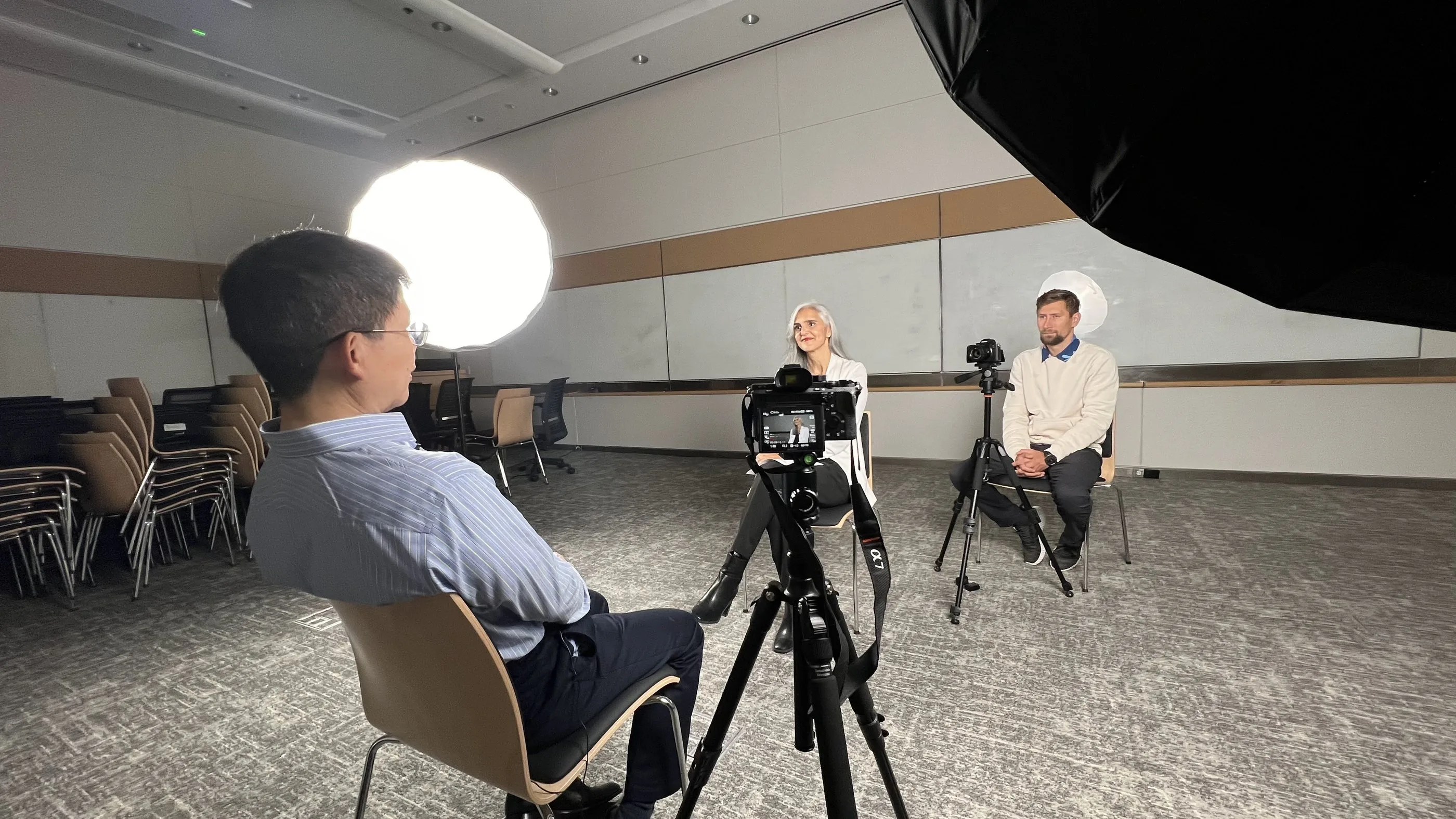
Every resident on camera signs a written authorization before we film, and your privacy lead approves the plan first.
01 / The decision
Senior living and rehab marketing videoFamilies decide fast.
Show them first.
When a parent leaves the hospital for rehab, the family often chooses a facility within days, from a list the case manager hands them, on a phone, between three names. Assisted living and memory care families take longer, but they want the same thing: to see the place and meet the people before the tour. A short film lets them see the therapy gym, the room, and the team who will care for their parent before they ever walk through the door.
02 / The First Visit
Senior living video package · One location, one filming dayThe First Visit
$4,500
A guided film of your community and straight answers to the questions families ask admissions, so they meet your team before they walk through the door.
Each additional location for the same operator: $3,500. Recruiting films and quarterly refreshes are quoted as one fixed number.
- A planning call and a written filming plan: approved by your privacy lead before the crew arrives
- One filming day on site: built around meals, therapy and visiting hours
- A 90 to 120 second guided film: your spaces and the people who run them: administrator or director of nursing, therapy lead, admissions
- Four family answers: 30 to 60 seconds each, on the questions families ask admissions, with vertical versions to text
- A 60-second referral cut: the therapy gym, clinical services and team, for hospital case managers
- 15 edited photos: spaces and staff, for your website, Google profile and listings
- Captions on every video: plus subtitle files
- Two review rounds: delivery in 10 business days
03 / Who it is for
Video for nursing homes, rehab and assisted livingThree settings.
One standard.
The shoot and the film follow the same plan wherever we go. What changes is the decision a family is making and how fast they make it.
- 01
Chosen in days
Skilled nursing and short‑term rehabilitation
The therapy gym, a real room, and the team a family will meet on day one, plus a referral cut your liaisons can send to hospital case managers.
- 02
A longer decision
Assisted living and memory care
Families compare several communities over weeks. A guided film warms up the tour, works on your website and listings, and answers the questions they are too polite to ask.
- 03
One standard, every community
Multi-location operators
The first location sets the structure, the questions, and the look. Each additional community gets its own film in the same style for $3,500.
04 / Proof in motion
Care interview video sampleA care leader.
Understood.
Not senior living: Beth MacNairn of Handicap International US, interviewed on site, on rehabilitation and care for people with disabilities in 61 countries. The craft is the one The First Visit runs on: a leader explaining care plainly, in words a worried family can follow.
Beth MacNairn of Handicap International US, interviewed on site at a humanitarian event, on the organization's work with people with disabilities in 61 countries, its rehabilitation services in northwest Syria, what the 2011 Hilton Humanitarian Prize meant after the Haiti earthquake response, and a Hilton laureates program for young nonprofit leaders in Haiti. Produced by Image Media Lab.
Read the transcript
Interviewer: For the introduction, can you tell us about your organization, and particularly your work for Handicap in Syria?
Beth MacNairn: Sure. Handicap International was founded 31 years ago. It was founded in a refugee crisis, and to work with landmine victims, people who had lost limbs. To this day, we are still working in crises, natural disasters, and in refugee settings like Syria. Our work has also expanded to include working with many different kinds of disabilities in many different kinds of contexts. We work in 61 countries: in development contexts, in landmines and weapons contexts like in Libya, and in natural disasters and in conflicts. Today, in Syria, we are working in the northwest part of the country, helping people who either chose to remain within Syria or who are trapped in the country to access basic physical rehabilitation services.
Interviewer: What has the prize meant to your organization?
Beth MacNairn: Handicap International was awarded the prize in 2011, and that was just following the Haiti earthquake, where we launched a massive response, again, for the injured. So in 2010 we responded to Haiti, and the prize allowed us to put the spotlight on the needs of people with injuries and with disabilities in natural disasters and in conflicts. These populations are often left out of humanitarian response. They're often invisible to humanitarian organizations who are responding, and to donors. This prize allowed us to talk about the fragile social systems that sustain people with disabilities, and their vulnerability in the case of massive dislocation.
Interviewer: Can you describe where and how your organization is involved in collaborating projects?
Beth MacNairn: The Hilton laureates have developed a collaborative project, and one of the first projects is an emerging leadership project that is looking at bringing the next generation of nonprofit social change leaders into the fold. This project is starting in Haiti. We've been present in Haiti for a number of years, well before the earthquake, and like a number of other laureates, we continue to do work there in a variety of fields.
So this collaborative project is really about bringing together organizations that are working on a variety of social and economic development projects and programs in Haiti, coming together and working with the Hilton Foundation and the Laureates Collaborative to provide opportunity for young leaders to work with us across laureates, to see how our organizations work together.
Interviewer: Thank you very much, Beth.
Beth MacNairn: Thank you so much.
05 / Filming around residents
Resident privacy and consent on setA home, not a set.
The plan comes first.
We do not need health information to make a good film, so we do not collect it. Your privacy lead approves the plan, residents choose whether to appear, and most of the story is told by your staff and your spaces.
Standard on every senior living shoot
- A filming plan approved by your privacy lead before the crew arrives
- Written authorization from every resident on camera, signed before filming, or from their legal representative under your policy
- Stories told mostly by staff, in spaces you clear in advance
- No health information in frame: charts, screens, whiteboards, and name plates are cleared
- A small crew that works around meals, therapy, and visiting hours
- Your infection-control policy followed on set
- Your NDA and vendor onboarding signed before day one; footage on encrypted drives and delivered on private links
06 / The record
Medical interview experience since 2012Clinicians on camera.
At ease.
Our longest-running work is a medical interview series: since 2012 we have filmed 80 physicians and scientists for “Conversations with Giants in Medicine”, The Journal of Clinical Investigation’s series, 15 Nobel laureates among them. That is where we learned to work around a clinical schedule, light a room in twenty minutes, and help a nervous expert sound like themselves. Your director of nursing and your therapy lead get the same care.
07 / How it works
How a senior living video project worksFour steps.
Built around care.
One senior team from the first call to delivery, with your marketing, admissions, and privacy leads involved where their sign-off matters.
- 01
Discovery
A short call or a written brief with marketing and admissions: the questions families ask most, the spaces worth showing, and where the film will run. You get a written outline and the fixed fee.
- 02
Planning
Interview questions and the four family answers drafted for your approval, the filming plan reviewed by your privacy lead, authorizations collected, and a schedule built around the day of the community.
- 03
Filming day
One day on site: the guided walk-through, interviews with your administrator or director of nursing, therapy lead, and admissions, the four answers, and photos of spaces and staff.
- 04
Delivery
The guided film, the four answers with vertical versions, the referral cut, 15 photos, captions, and subtitle files, with two review rounds. Delivered in 10 business days.
What does a senior living video cost in Dallas?
The First Visit is $4,500 for one location: one filming day, a 90 to 120 second guided film, four answers to the questions families ask admissions, a 60-second referral cut for hospital case managers, and 15 photos. Each additional location for the same operator is $3,500. Recruiting films and quarterly refreshes are quoted as one fixed number.
What do families want to see in a nursing home or rehab video?
The therapy gym and the people who run it, a real room, the dining room, the nurses and aides who will know their parent by name, and straight answers to what they ask admissions: what a day of therapy looks like, how visits and updates work, what to bring, and what happens at discharge.
Can you film residents?
Yes, when a resident chooses to appear and a written authorization is signed before filming, by the resident or by a legal representative under your policy. A First Visit film can also be told mostly by staff and spaces, which keeps the shoot simple and respects residents who would rather not be on camera.
How do you handle HIPAA and resident privacy?
HHS guidance says a film crew should not have access to areas where residents' health information can be seen unless each affected resident has authorized it in advance, and blurring faces afterward does not fix that. So the plan comes first: your privacy lead approves which spaces we film and when, authorizations are signed before the camera rolls, and charts, screens, and name plates stay out of frame. Your compliance team decides whether any agreement beyond your NDA applies, and we follow that decision.
Where will we use the videos?
On your website and Google Business Profile, in the texts and emails your admissions team sends families, on listings that accept video, and with hospital case managers through the referral cut. Every video comes captioned, in widescreen and vertical.
We run several communities. How does that work?
The first location sets the structure: the questions, the look, and the order of the film. Each additional location for the same operator is $3,500, so every community gets its own film in a consistent style.
Start a project
Tell us about the place.
The type of community, how many locations, and where the film will run. We reply within one business day with an outline, the fixed fee, and the first available filming date.
Brief received
Thanks. You’ll hear from us in writing within one business day.
Your brief is with our Dallas team. If it is urgent, call (469) 370-9832 and we will pick up. If a call helps after the first reply, pick a time.