
To choose a corporate video company in Dallas, check five things before you compare prices: work that matches your use, the people who will actually be on set and in the edit, a written quote that lists every deliverable, who owns the finished files and the music, and a delivery date in writing. The rest of this checklist covers process, revisions, insurance, drone licensing, references, and the red flags that predict a difficult project.
It is written for marketing, communications, and HR teams hiring a corporate video production company for an executive interview, a customer testimonial, a brand film, or event coverage. The same questions work whether you are comparing a freelancer, a production company, or an agency.
Related: corporate video production in Dallas and video production pricing.
Work that matches your use
A reel proves a company can make footage look good. It does not prove they can put your CFO at ease, cover a 600-person conference, or turn one interview into a month of LinkedIn clips. Ask for two or three complete examples in the format you need, and watch them in full with the sound on. Look and listen for:
- Clean audio, with no room echo or rustling microphones
- Interview subjects who sound like themselves, not like they are reading
- An edit that holds attention past the first 30 seconds
- Vertical versions and captions, if the work was made for social
Then ask what the company did on each piece. A portfolio can mix full productions with jobs where the team only ran camera for someone else.
Who will actually be on set
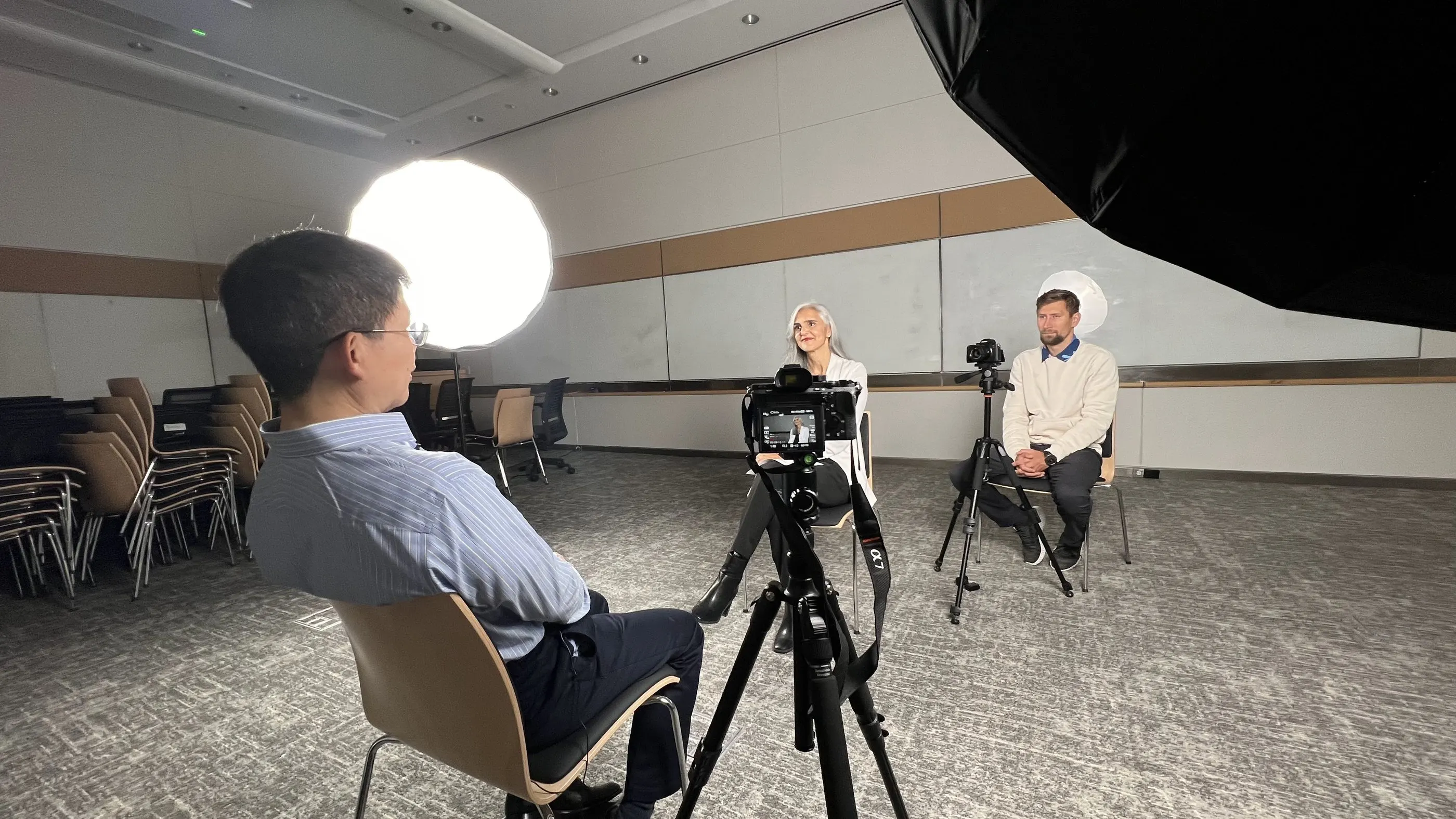
Ask by role: who directs the interview, who runs camera, who records sound, who edits, and whether the person on your first call will be at the shoot. At some companies the person who sells the job never directs it, and the editor never hears the brief firsthand. That model can work, but you should know which one you are buying.
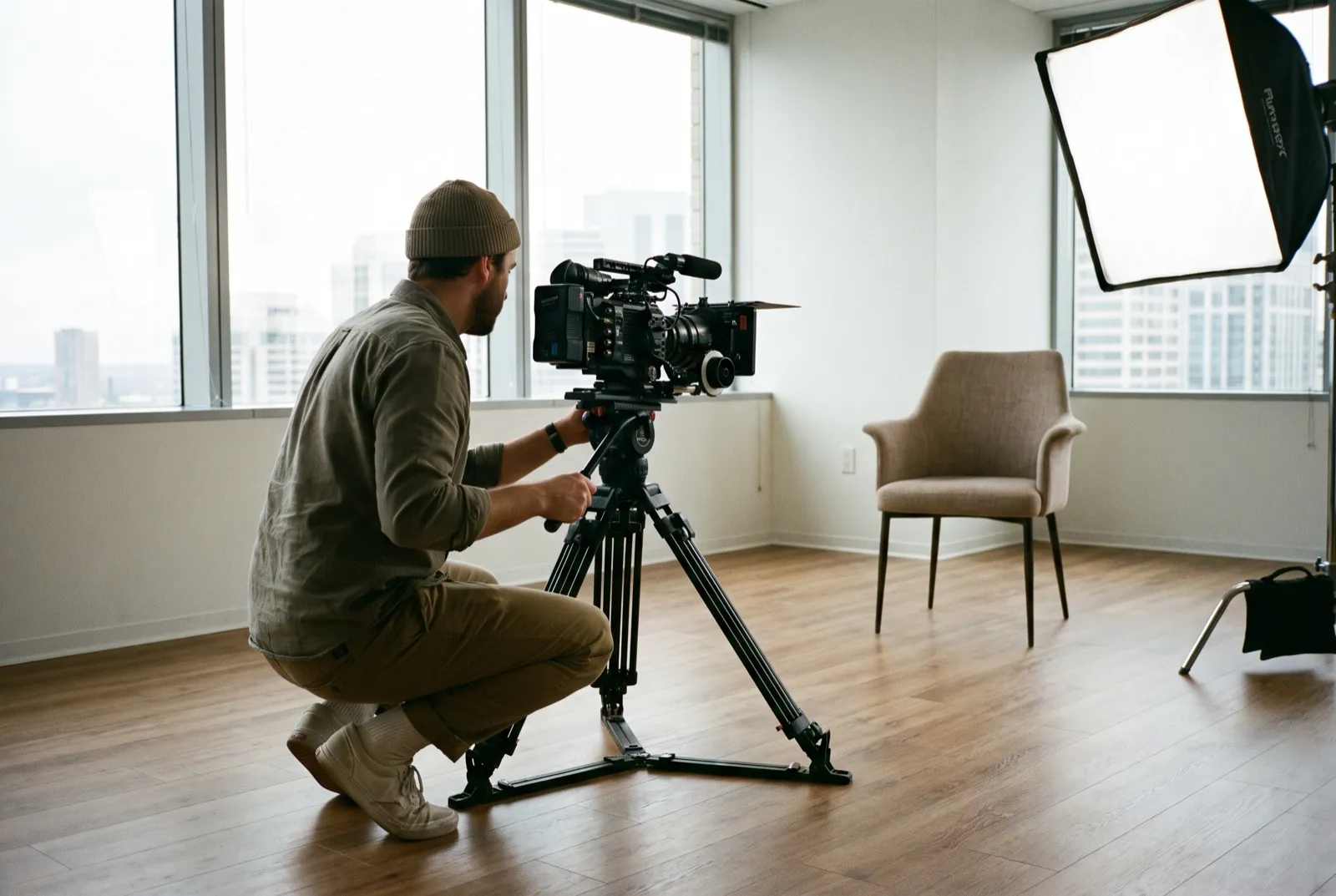
Crew size should match the job. One experienced director-cinematographer can run a single-executive interview. A multi-subject brand film or a conference with several rooms needs more people. Bigger is not automatically better: every added person raises the cost and puts one more stranger in your CEO’s office.
At Image Media Lab, a director-cinematographer is on every shoot, and the people who plan the shoot also sit in the edit.
How the project will run

A professional company can describe its process in a few steps, with dates attached:
- Discovery. A call to agree on the audience, the message, and what success looks like.
- Pre-production. Interview questions or a script, a shot list, locations, and a schedule you approve.
- Production. The shoot, with setup time planned around your people’s calendars.
- Post-production. The edit, color, sound, licensed music, captions, and your revision rounds.
- Delivery. Final files in every format you need, on a date stated in writing.
Ask how much of your team’s time each step needs and who on your side approves each stage. For a sense of what thorough interview prep looks like, our pre-production guide lists more than 80 interview and strategy questions.
Fixed fee or day rate
Corporate video is usually priced one of three ways:
- Day rate. You pay for crew time, and editing is often billed by the hour on top. It suits open-ended work where you direct the crew yourself. The total is known only at the end.
- Fixed fee. One price for a defined list of deliverables. The scope is set before the work, and any change is quoted before it is made.
- Agency fee. Strategy, media buying, and production in one contract. Useful when you need all three; ask whether the production is done in-house or subcontracted.
A fixed fee is easier to compare and easier to get approved, because the deliverables are the scope. A day rate can look cheaper on paper and still produce the larger invoice once editing hours and extra revisions are added.
What a quote should list
Whichever model you choose, a quote you can compare names:
- Shoot days, hours on site, and locations
- Crew roles, and who directs
- Pre-production: questions, script, shot list
- Every finished deliverable, with its length and aspect ratio
- Captions, color grading, sound, and music licensing
- The number of revision rounds
- A delivery date, in business days from the shoot
- Usage rights
- Travel, rush fees, and any other extras
- The payment schedule, and what happens if the shoot date moves
For a benchmark, here is how our own interview packages list theirs. Each includes color grading, captions, and licensed music cleared for paid and organic use.
- The Executive Spotlight, $3,500: a half-day shoot, interview questions drafted for your approval, a hero interview film, a 60-second LinkedIn cut, 5 captioned vertical cuts of 15 to 45 seconds, 8 professional photos, two rounds of revisions, and delivery in 7 business days.
- The Success Story, $3,500: a half-day shoot at your customer’s business or office, a 90 to 180 second testimonial, a 30-second sales-page cutdown, 5 vertical cuts, 8 photos, two rounds of revisions, and 7 business days.
- The Leadership Duo, $4,500: a half-day two-camera shoot, one narrative film with both leaders, a standalone reel for each, 5 vertical cuts, 8 photos, two rounds of revisions, and 7 business days.
- The Corporate Narrative, $6,000: a strategy session, a full-day shoot, a 2 to 3 minute brand film, a 60-second cut, 8 captioned vertical cuts, 3 leader reels, 15 retouched portraits and photos, three rounds of revisions, and 10 business days.
When a project doesn’t fit a package, our custom quotes itemize every line from one formula: (Crew + Gear) × Shoot Days + Post-Production Hours + Creative Fee.
The deliverables, line by line
The shoot is over in a day or less. The deliverables are what you publish for months, so check each one:
- Lengths. Ask for the length of every piece: for example, a 2 to 3 minute film for the website, a 60-second cut for LinkedIn and email, and short clips for social.
- Aspect ratios. 16:9 for the website and YouTube, 9:16 for Reels, TikTok, and Shorts, and 1:1 or 4:5 for feeds. Vertical cuts should be reframed and re-edited for a phone, not just cropped.
- Captions. Ask whether they are burned in, delivered as a separate file, or both, and whether a person checks them before delivery. Automatic captions often get names and product terms wrong.
- Photos. Some packages include stills from the shoot, which saves booking a photographer for the same day.
- Raw footage. Policies vary. If you plan to re-edit later, ask whether it is included and in what form.
Music licensing and usage rights
These are the lines that cause trouble a year later, so get them in writing:
- Music. Stock music is licensed by use, and a track cleared for organic social may not be cleared for paid ads or broadcast. A popular song needs separate licenses from its rights holders, which is rarely practical for a corporate video. Ask for music cleared for every place you plan to run the video.
- Ownership. You should be able to use every deliverable on any platform, in paid ads, for as long as you like. Confirm it in the contract.
- Releases. Everyone on camera, especially customers, should sign an appearance release. Ask who provides the form and who keeps the signed copies.
Revisions and turnaround
Ask how many revision rounds are included, what counts as a round, and what a change outside the scope costs. A round is usually one consolidated set of notes, so collect feedback from every stakeholder before you send it.
For turnaround, get a delivery date in business days from the shoot, and ask what happens to it if your feedback runs late. If the video has to be ready for a launch, a board meeting, or a conference, say so on the first call, not after the shoot.
Insurance, and FAA Part 107 for drone work
Corporate campuses, hospitals, and event venues often ask for a certificate of insurance before a crew can load in. Request it early, with your company or the venue named as additional insured if they require it.
Drone work has its own rules. Commercial drone flights in the US require an FAA Part 107 remote pilot certificate, and much of Dallas-Fort Worth sits inside the controlled airspace around DFW International and Dallas Love Field, where flights need FAA authorization. Ask for the pilot’s certificate, proof of drone insurance, and who files the airspace request. Our guide to Part 107 waivers near DFW airports covers the details. Image Media Lab flies its drone work under FAA Part 107 certification and carries insurance for commercial drone flights.
References and reviews
- Call two references from projects like yours. Ask whether the shoot ran on time, whether the invoice matched the quote, and whether they would hire the company again.
- Read reviews for specifics: the kind of project, the people involved, and how problems were handled. A few detailed reviews tell you more than many one-line ratings.
Red flags
- A quote with one line, such as “video production: $8,000”, and no deliverables list
- A day rate with editing “to be determined”
- No mention of music licensing or usage rights
- “Unlimited revisions” in place of a defined scope
- Nobody can tell you who will be on set
- A delivery promise with no date, such as “quick turnaround”
- Drone footage offered without a Part 107 certificate or insurance
- Pressure to pay in full before the scope is in writing
How Image Media Lab answers the checklist
Our case studies and finished films are on the work page. Our twelve production packages are fixed fees from $1,500 to $15,000, each listing its deliverables and delivery window, and custom projects get one written number after a short discovery call, never an hourly meter. Music is cleared for paid and organic use, and the finished files are yours to use anywhere, including paid ads, in perpetuity. Planning an event? See how much it costs to film a conference in Dallas.
If you are comparing companies, send us the same brief you send everyone else through the quote form. You’ll get a package recommendation and a fixed fee in writing, which makes the side-by-side simple.